


Losing a significant amount of weight is an incredible accomplishment, whether you achieved it through lifestyle changes, bariatric surgery, or newer GLP-1 medications. While reaching your goal weight can improve your health and confidence, many patients discover that loose skin after weight loss keeps them from fully enjoying their transformation.
If you’re considering plastic surgery after weight loss, timing matters. Scheduling surgery too early can affect your results, while waiting until the right time helps ensure the safest procedure and the longest-lasting outcome.
Why Does Loose Skin Develop After Weight Loss?
When you rapidly lose significant weight, the skin often can’t shrink to match your new contours. Factors such as age, genetics, the amount of weight lost, and the length of time the skin was stretched all influence how much excess skin remains.
I’m seeing more patients who’ve successfully lost weight with GLP-1 medications such as Ozempic®. While these medications have revolutionized obesity treatment, rapid weight loss can leave loose skin on the abdomen, arms, thighs, breasts, face, and neck. Many patients also experience a loss of volume, which alters their overall body proportions.
Fortunately, post-weight-loss body contouring offers solutions that can help complete your transformation.
The Best Time for Plastic Surgery After Weight Loss
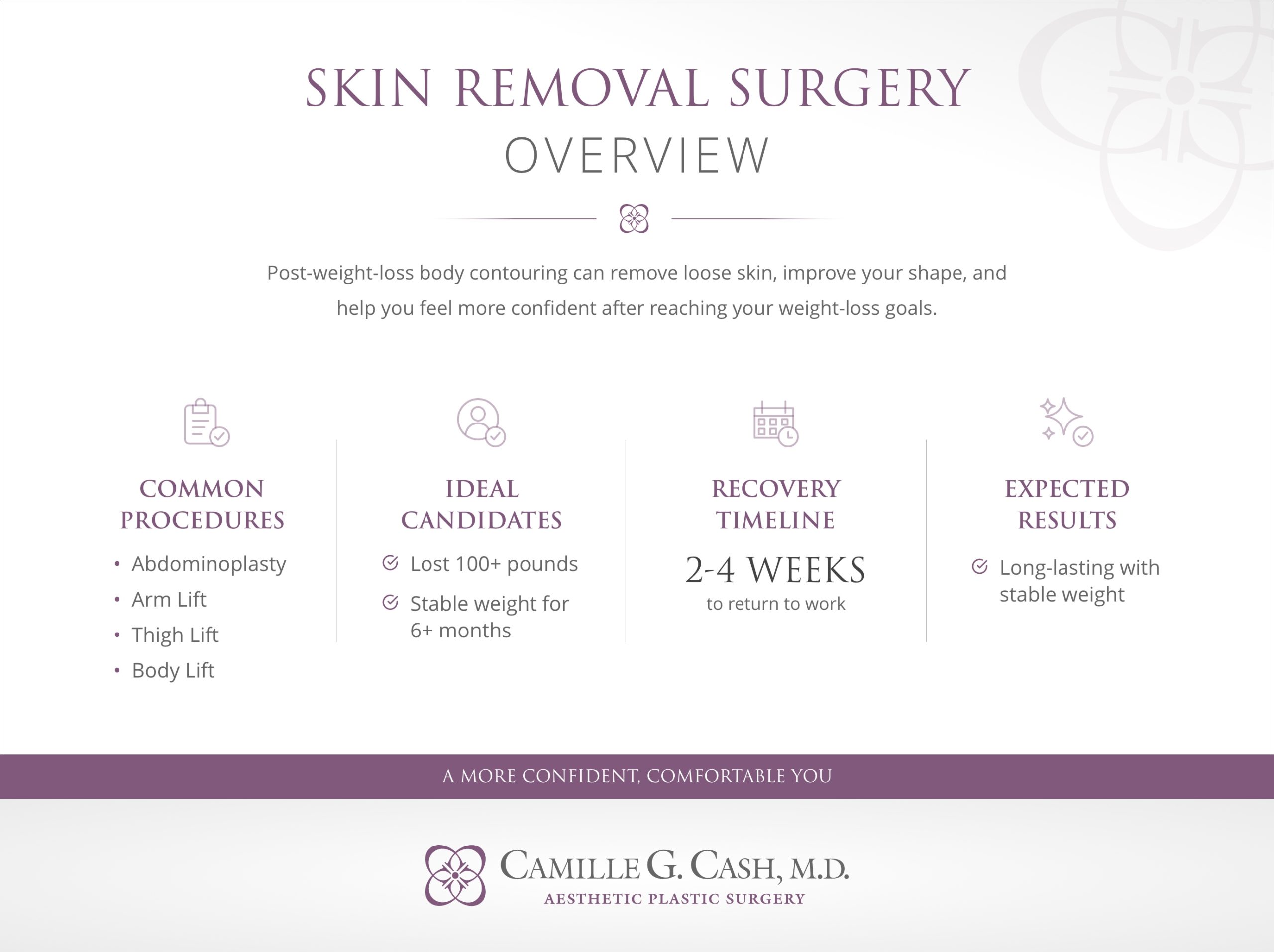
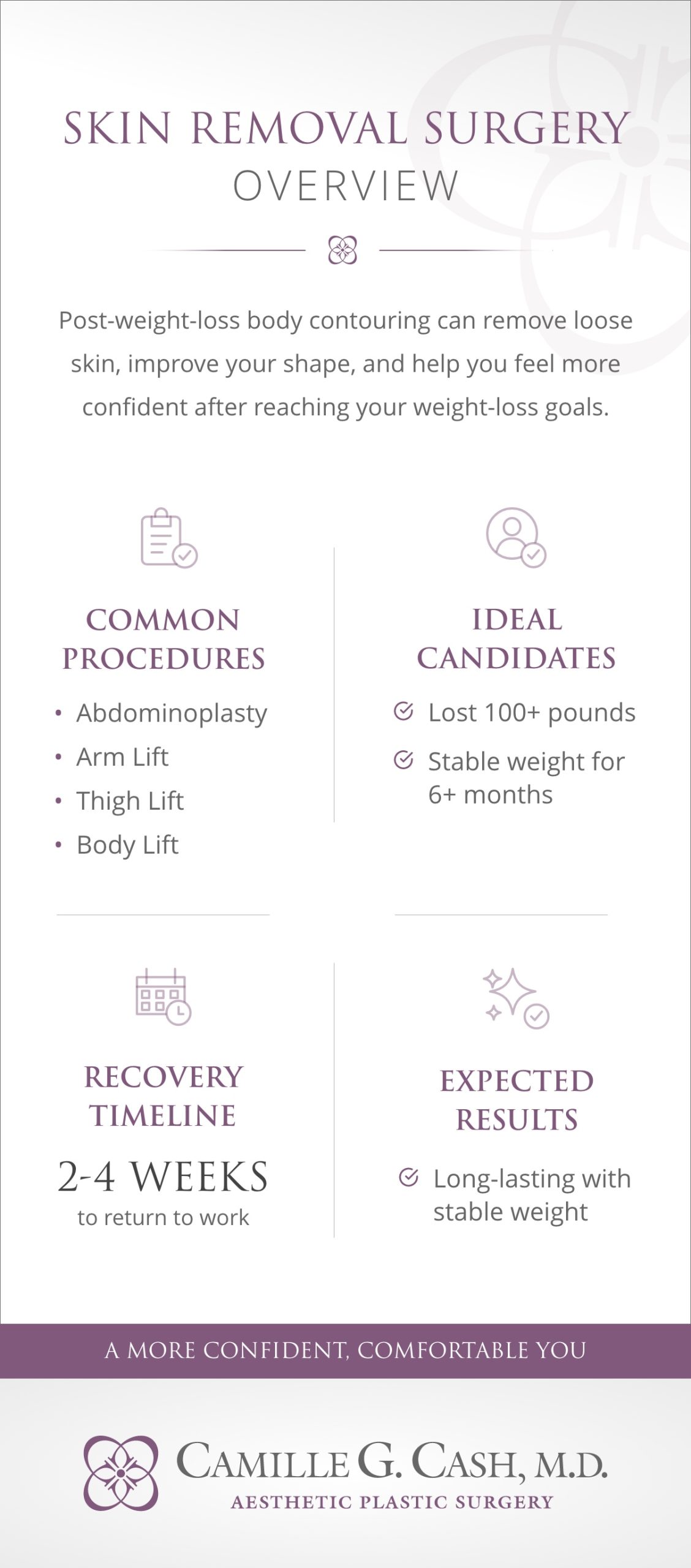
I recommend waiting until you’ve reached a stable weight before moving forward with surgery. Ideally, your weight should remain relatively consistent for at least 6 months. That’s because if you continue losing weight after surgery, you may develop additional skin laxity, which can affect your results. On the other hand, significant weight gain after surgery can strain the repaired tissues and compromise your outcome.
For patients using GLP-1 medications, it’s also important to discuss your treatment plan with both your prescribing physician and your plastic surgeon. Together, they can help determine the ideal timing for surgery based on your overall health and long-term weight-loss goals.
Are You a Good Candidate?
Every patient is different, but you may be a good candidate for body contouring surgery after weight loss if you:
- Have reached or are close to your goal weight
- Have maintained a stable weight for several months
- Are in good overall health
- Do not smoke or are willing to stop before surgery
- Are bothered by excess skin or changes in body contour
- Have realistic expectations about your results and recovery
During your consultation, I’ll evaluate your concerns and recommend the procedures that will provide the greatest improvement.
WARNING:
This feature contains nudity. Please click OK to confirm you are at least 18 years of age and are not offended by such material.


What Procedures Can Address Loose Skin After Weight Loss?
I create customized surgical plans based on each patient’s areas of concern. In some cases, I’ll recommend combining multiple procedures during a single operation. It’s sometimes safer, however, to stage procedures in separate surgeries.
Skin-removal procedures include:
- Tummy tuck (abdominoplasty) to remove excess abdominal skin and repair separated muscles
- Arm lift to improve loose, hanging skin on the upper arms
- Thigh lift to tighten excess skin on the inner or outer thighs
- Breast lift or breast enhancement to restore a more youthful breast shape
- Lower body lift to address loose skin around the abdomen, hips, buttocks, and outer thighs
- Facelift or neck lift for facial sagging that can occur after significant weight loss
No matter which procedures are right for you, each plan is tailored to your unique anatomy and goals.
What About Skin Tightening Without Surgery?
Nonsurgical skin tightening after weight loss is possible if your skin still has significant elasticity. These treatments stimulate collagen production, making them a good option for patients with minimal excess skin. An EmbraceRF® procedure, for example, uses radiofrequency energy to trigger the skin’s healing response. However, when significant loose skin is present, surgery is typically the only way to remove the excess tissue and create meaningful contour improvement.
During your consultation, I’ll explain both surgical and nonsurgical options and help you determine which approach best matches your goals.
Completing Your Weight-Loss Journey
Reaching your goal weight is a major milestone, but it isn’t always the final step. If loose skin after weight loss affects your confidence or makes it difficult to enjoy your results, body contouring procedures can help reveal the shape you’ve worked so hard to achieve.
You can use the online form to request a consultation to learn more about your options. Or call our office at (713) 571-0600 to schedule an appointment.
Leave a Reply